Cable Didn’t Die. It Pruned Itself Into Premium.
Once, cable was the media platform no one trusted. “Why buy it? Half the neighborhood doesn’t even have it.”
Decades later, the complaint flipped. Same words, different reason:“Why buy it? Half the neighborhood doesn’t even have it.”
Yet the signal never stopped.
The power of the physical address
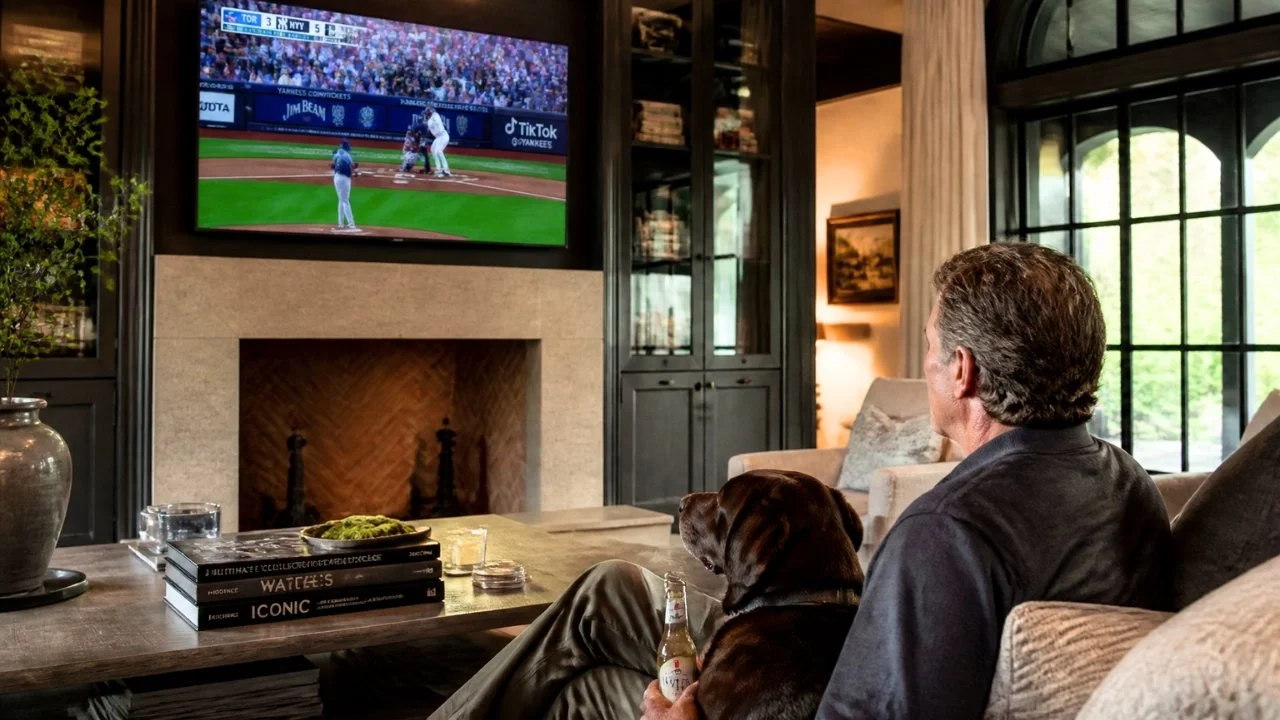
Somewhere on Long Island, a man subscribes to the Gold Package just to watch the Yankees in peace. He settles into his chair, remote in hand. No algorithm is guessing. The network knows exactly which living room that chair sits in.
He has a mortgage. A funded 401(k). A mailbox full of bills he actually pays.
That same quiet certainty exists outside Chicago, Dallas, Atlanta, and Denver. Different teams on the screen. Same kind of household.
The modern consumer may scroll across a dozen screens, but her economic identity still lives at a physical address. An anonymous digital impression does not buy a car, a luxury cruise, or a kitchen renovation. A verified household does—one with a real footprint and a real credit profile.
The great filter
When the masses cut the cord, they created an unexpected filter. What remains is a self-selected group of older, higher-income households. These are people who value convenience, reliability, live sports, and local news enough to keep paying for them.
The arbitrage of attention
While the rest of the ad world chases billions of anonymous digital impressions, it drives up the cost of fragmented attention. Advertisers are paying a premium to guess who is behind a CTV screen, while ignoring the definitive, deterministic household data cable provides for less.
Look at the current market arbitrage:
Approximate U.S. CPMs (2026)
| Channel | Typical CPM Range | Common Working Average | Notes |
|---|---|---|---|
| Linear Cable1 | $8–$28 | ~$15–$20 (primetime) / my vary by DMA. | National cable primetime around $17–$20 in the latest upfronts. |
| CTV / Streaming2 | $15–$45+ (up to $65 premium) | ~$25–$30 | Blended market average ~$26. FAST/AVOD (Tubi, Pluto, etc.) is cheaper ($15–$25); premium direct or sports is higher. |
| Meta (Facebook + Instagram)3 | $7–$25+ (higher in competitive verticals) | ~$10–$18 | Broad reach campaigns often land $10–$15. Sales/lead-gen or tight targeting pushes it higher. Highly variable by objective, audience, and season. |
The window of opportunity
Digital has its place. AI-driven ads can be highly effective. Print remains a viable channel. Google still ships large volumes of direct-mail postcards to real addresses.
But for brands that live or die on high-trust, high-value consumers like wealth management, premium travel, golf, and luxury retirement, cable is the most precise instrument still available.
The physical pipes are not disappearing. They remain the permanent infrastructure powering the home. The cable box is giving way to streaming platforms, yet the underlying network and the audience it delivers have not.
Right now, we are sitting inside a massive, misunderstood, and undervalued window of opportunity.
Cable has not died. It has simply pruned itself back into premium.
Sources:
Adwave – Average CTV CPM Q2 2026; eMarketer Digital Video trends
Affect Group – US Meta Ads CPM 1Q 2026; Triple Whale / industry benchmarks summarized in multiple 2025–2026 reports; CPM Calculator & platform averages
These figures are market averages and can vary significantly by market, daypart, targeting precision, seasonality, and negotiation.
Key Context
Cable is frequently the most efficient of the three on a pure CPM basis, especially when you buy local or non-primetime inventory. It also benefits from household-level addressability and high attention (the guy in the chair watching the Yankees).
CTV sits in the middle-to-premium range. You pay more than most cable, but you get full-screen, non-skippable (or high-completion) video plus stronger digital-style targeting.
Meta usually wins on raw CPM and is the easiest to start small. The trade-off is attention quality. People are scrolling, not leaning back, so effective cost per completed view is often higher than the headline CPM suggests.
Bottom line for most brand or local campaigns: Cable still delivers some of the lowest CPMs with the highest certainty of where the viewer actually lives. CTV costs more but adds precision and scale among cord-cutters. Meta is cheapest on paper but requires more volume (and creative work) to match the impact of a living-room impression.